 English
 Spain
 Deutsch
 GET A QUOTE


Published by MeeyaPack | Packaging & Logistics Insights
Long-distance transportation presents several challenges for businesses shipping industrial components, precision parts, and other valuable products. Even when goods travel in well-maintained trucks, unexpected braking, sharp turns, uneven roads, and repeated handling can cause cargo to shift, collide, or become damaged.
For companies involved in international trade and industrial supply chains, choosing the right packaging is essential to reducing transportation risks, protecting product quality, and controlling logistics costs.
Different products require different levels of protection. Before selecting packaging, businesses should consider product weight, dimensions, fragility, surface sensitivity, and transportation conditions.
Precision components and delicate parts may require custom-designed inserts, foam cushioning, or dedicated compartments to prevent movement and absorb impact. Although customized protective packaging may involve higher initial costs, it can help reduce damage-related losses for high-value products.
For more durable products, such as certain plastic components or textile goods, dividers, partitions, and appropriately sized reusable containers may provide sufficient protection while keeping packaging costs under control.
The key is to match the packaging solution to the product's actual protection requirements rather than applying the same packaging method to every shipment.
Internal cargo movement is a common cause of scratches, impact damage, and product deformation during transportation.
To minimize these risks, products should be positioned securely inside their packaging. Depending on the application, suitable solutions may include:
Custom foam inserts for fragile or precision components
Plastic dividers and partitions to separate individual products
Reusable plastic containers designed for specific product dimensions
Dunnage and cushioning materials to fill gaps and limit movement
For businesses shipping products repeatedly, reusable packaging with standardized internal compartments can improve packing consistency and reduce reliance on disposable materials.
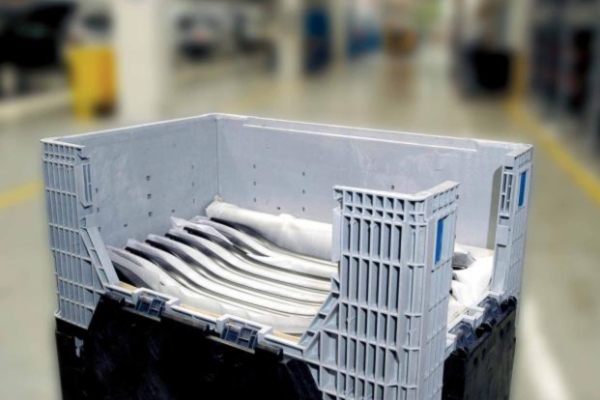
Protecting products inside individual packages is only part of the process. The entire load must also remain stable during transportation.
Reusable plastic containers, sleeve pack containers, and palletized packaging systems can help organize goods and support efficient handling. However, even well-designed packaging cannot eliminate the risk of load movement if pallets are improperly stacked or secured.
To improve load stability, businesses should:
Stack containers according to their design and load-bearing limits.
Align packages properly to create a stable load.
Use suitable strapping, stretch wrapping, or other cargo-securing methods where appropriate.
Secure palletized goods to the transport vehicle using suitable restraints.
Follow applicable load distribution and cargo-securing requirements.
Before shipment, the complete load should be inspected to ensure that containers, pallets, and securing equipment are correctly positioned.
For manufacturers and distributors operating regular transportation routes, reusable transport packaging can offer benefits beyond product protection.
Reusable plastic pallets and containers can support standardized handling, improve warehouse organization, and reduce the need for single-use packaging when an effective return and reuse system is in place.
For example, sleeve pack containers can provide a practical solution for transporting and storing industrial components. When combined with suitable internal dunnage and pallet systems, they can help create a more organized and repeatable packaging process.
The right solution depends on product dimensions, payload, stacking requirements, transportation conditions, and the availability of a return logistics system.
Packaging plays an important role in reducing transportation damage, but it cannot eliminate every risk.
Proper loading procedures, suitable vehicle restraints, trained handling personnel, and safe driving practices are equally important. Businesses should assess transportation risks across the entire shipping process, from packing and warehouse handling to loading, transit, and unloading.
A comprehensive approach helps reduce preventable damage, improve delivery reliability, and protect the value of shipped goods.
MeeyaPack focuses on reusable transport packaging and industrial packaging solutions, including plastic pallets, sleeve pack containers, and related packaging options.
We help businesses explore packaging solutions based on their products, handling requirements, and logistics needs. By considering both internal product protection and external load stability, companies can work toward safer transportation and more efficient packaging operations.
If you are looking for a suitable packaging solution for your products, contact MeeyaPack to discuss your application and requirements.
MeeyaPack — Packaging Solutions for More Efficient Logistics.