 English
  Spain
Spain  Deutsch
 GET A QUOTE


Over the past decade, passenger vehicles have transitioned from luxury goods to everyday household necessities. Driven by expanding consumer demand, automotive manufacturing has scaled rapidly. Modern OEM assembly plants rely heavily on vast networks of specialized component suppliers. As automotive parts manufacturing expanded into large-scale industrial output, legacy logistics methods quickly became major operational bottlenecks.
In the early stages of automotive logistics, single-use wooden crates were the primary method for component transport. However, as shipping volumes surged, the limitations of wooden packaging created significant cost and safety challenges. Disposable wooden crates incurred high recurring purchasing costs, required labor-intensive uncrating, introduced safety hazards such as exposed nails, and caused high cargo damage rates. To maintain strict quality control and streamline material flow, automotive OEMs required a cleaner, structural, and returnable packaging solution.
Collapsible plastic pallet containers emerged as a revolutionary alternative to disposable wooden crates. Designed with integrated pallet bases, these heavy-duty containers support seamless forklift handling and high-efficiency warehouse operations. Transitioning from single-use wood to returnable plastic containers eliminates packaging waste, directly aligning with global sustainable manufacturing and green logistics standards.
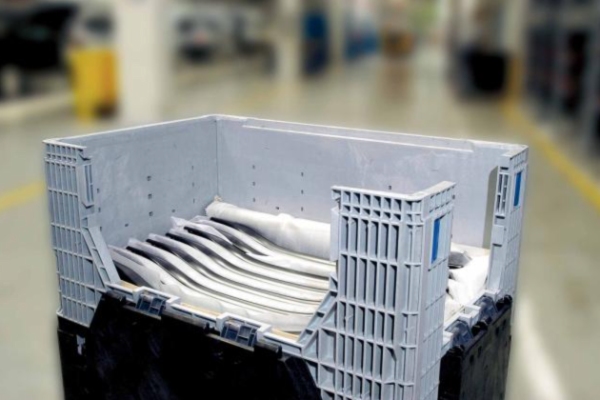
Manufacturing solid plastic pallet boxes requires high-precision injection mold tooling and sophisticated structural engineering. To meet specific automotive assembly requirements, these container designs continue to advance:
Access Doors and Latches: Integrated drop-down doors with secure locking mechanisms allow assembly line workers to easily pick components without unstacking heavy containers.
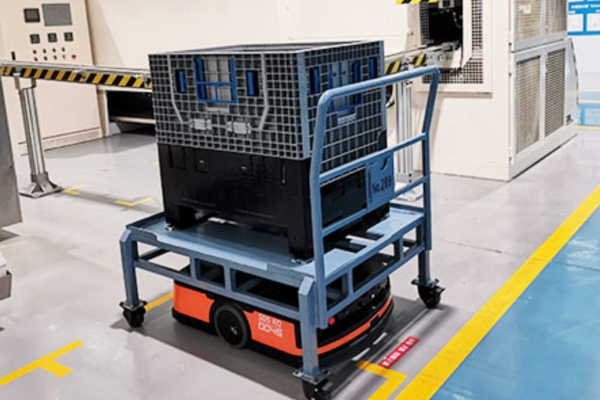
Compact Footprints for Automation: While 1200x1000 mm remains the global standard logistics footprint, MEEYA PACK has developed specialized compact pallet containers, such as the 800x600x760 mm size. This footprint is specifically engineered to integrate with automated assembly lines, Automated Guided Vehicles (AGV), and smart warehouse systems, providing tailored protection for compact, high-value components like electronic modules and small engines.
As the global automotive industry accelerates its transition toward Electric Vehicles (EV) and clean energy technologies, component supply chains are undergoing rapid restructuring. Moving forward, specialized returnable packaging will play a critical role in transporting EV battery modules, power electronics, and electric drive units. Collapsible plastic pallet containers will continue to evolve, offering clean, secure, and highly efficient packaging solutions for next-generation automotive manufacturing.